A guide to how to measure… coming soon
Wall railings with brick piers
Measuring a wall is straightforward. I always recommend measuring the length at the bottom of the wall from pier to pier, then repeating the measurement at the top between the same points. If there is a significant difference, it could indicate a level issue. Typically, the measurements should be within a few millimetres of each other.
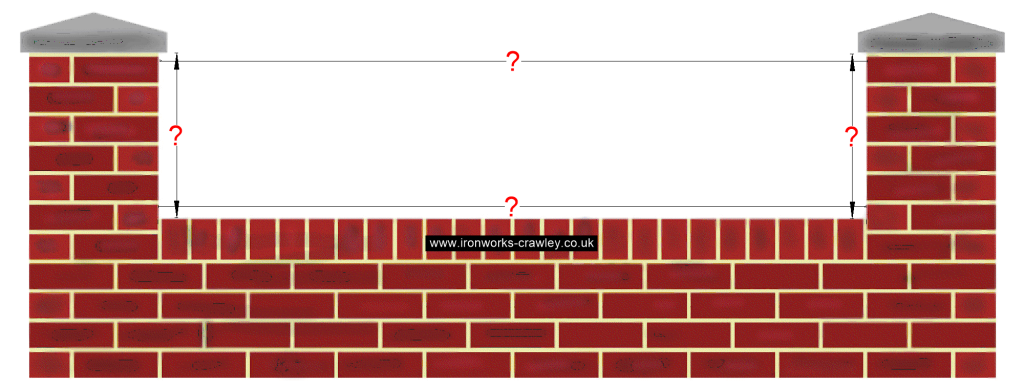
Next, measure the height on the left side and verify that the right side matches. It is normal to have slight differences between the two measurements. Record all measurements carefully. If it helps, sketch the measurements on a piece of paper, take a photo, and email it over. Ideally if you have a spirit level handy, it is always good to confirm the wall is level.
Wall without brick piers,
If the wall doesn’t have brick piers, then we only need the distance you are trying to cover, and obviously the height you want the railing. I can work out ideal panel length and posts that are needed. Check the wall for level. It is not unusual for a short wall without brick piers to follow the slope of the ground if there is one.
If the surface is on a slope, that’s not a problem—we just need to know the degree of the slope. While I have a fancy digital level that provides the exact angle, it’s not necessary; a standard level works just as well. Place the level against the wall and lift one end until the bubble is centered. Then, find something to prop up that end—coins often work perfectly. Once the level reads perfectly horizontal, measure the height of the packing or how much you lifted that end of the level.
Knowing the length of the level and the amount it is raise will give the angle (30mm lift on a 900mm or 3ft long level is about 2 degrees), check it in various places along the wall to get an average. The longer the level is the more accurate the result.
