A Juliet balcony is essential if you have inward-opening doors on the first floor or higher. Unlike a walk-on balcony, a Juliet balcony is a protective railing installed outside the doors to prevent anyone from falling. It must comply with UK building regulations.
In simple terms, the railing must be at least 1100mm high from the floor level, and any gaps should be small enough that a 100mm sphere cannot pass through. This means the vertical bars should be spaced 100mm apart or less. Additionally, the balcony must withstand a horizontal force of approximately 74kg per meter in length.
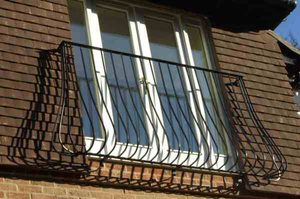
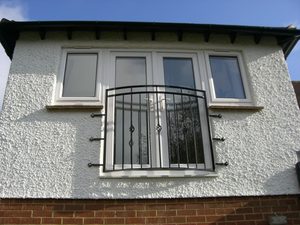
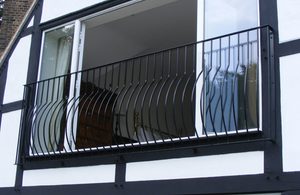
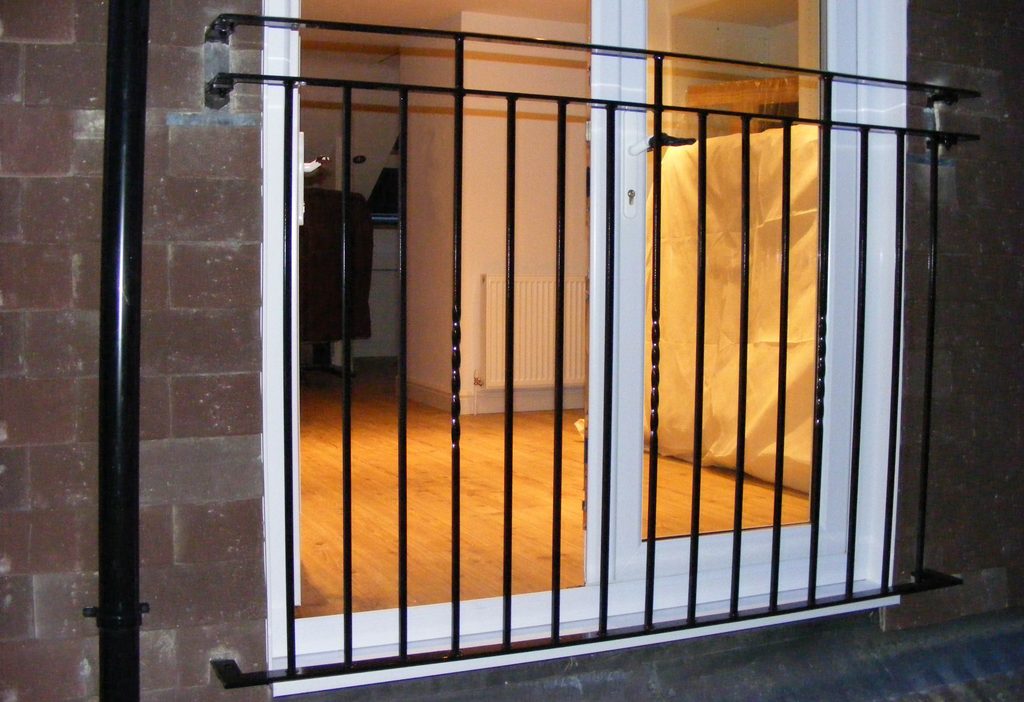
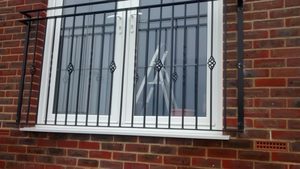
The vast majority of Juliet balconies are fixed to the wall surrounding the door opening, typically made of brick. Therefore, the balcony should extend at least 300mm beyond the door size. This ensures the fixing holes are positioned away from the edges of the brickwork. Drilling too close to the edges can cause bricks to crack and lead to insecure fixings.
Single point fixings, which involve one fixing at each corner, should be avoided. This method places too much load on too few fixings. Cluster fixings, where multiple fixings are placed close together, should also be avoided. Drilling and fixing near each other can cause cracks in the wall, making the entire cluster unstable if a crack extends from one hole to another. Needless to say we avoid both these methods in our fixing design, as they are considered unsafe.
Brick fixing.
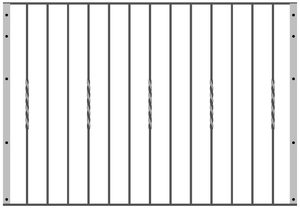
Our fixing method is straightforward: a flat bar runs vertically along the edge of the balcony. The bar features multiple holes, with two holes on each side near the top, positioned carefully to avoid cracking issues commonly seen with cluster fixing. Then 3 more holes spaced out over the rest of the bar. So in total 5 fixing points per side. This is a simple and effective method where the Juliet balcony is being bolted to brick work.
Tile hung.
Not all Juliet balconies are fixed to brickwork. When a house has tile-hung walls, the standard method is unsuitable. Instead, a specialized alternative is used for tile-hung walls. Bolting directly into clay tiles is not possible because they would crack under the pressure of fixing. In patio-style doors installed on tile-hung walls, the upper section of the house is usually built with a timber frame.
In timber frame construction, structural timbers are used to securely fix the door in place. This is also the ideal location for installing the balcony brackets. For tile-hung balconies, use a bracket attached directly to the structural fixing point, onto which the balcony is mounted. Some tile-hung houses are not timber frame but are built with lightweight blockwork, which is then battened and tile-hung. This method functions similarly to timber frame tile-hung construction, except the fixings are anchored into the blockwork. Since blockwork is not as strong as brick for fixings, we recommend drilling through the blockwork and using a backing plate. This plate has holes matching the front plate and is clamped securely between the blocks for added strength.
Juliet balcony construction
There are several ways to create a Juliet balcony, each affecting the overall cost. Since I custom-make every piece to order, I can offer a variety of styles. The best option depends on the existing door style and how it is installed.
Originally, all our balconies extended 80mm from the wall before running the desired length and then stepping back to the wall. This design was effective because most doors had external handles that protruded beyond the brick wall. The balcony needed to provide enough clearance for the handles to operate smoothly. By stepping the balcony 80mm off the wall, we ensured sufficient space to avoid interference with the door handles and allowed adequate clearance for the door sill.
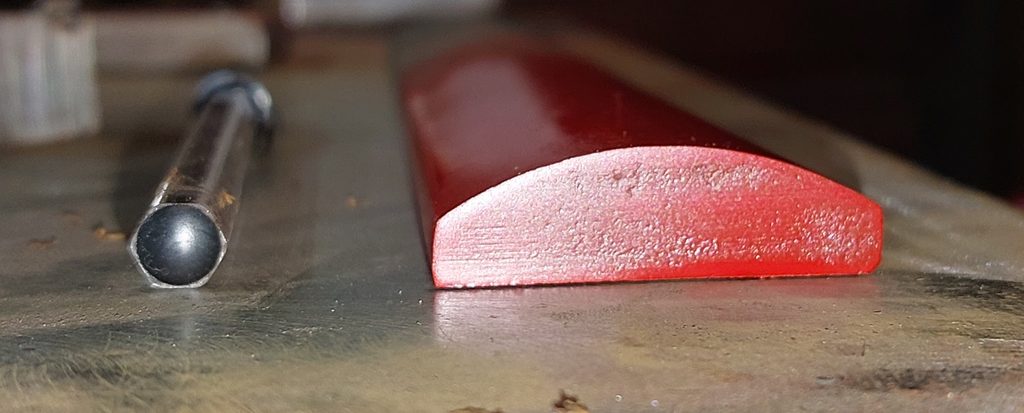
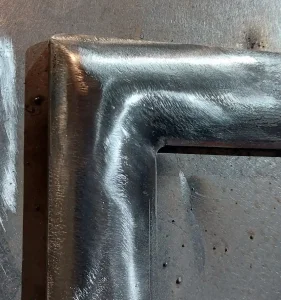
Balcony top rails are typically made from steel sections, like the one shown in the photo. The challenge arises when the rail needs to return to the wall, requiring it to be cut and joined with a mitre joint. Creating a clean, seamless join demands time and effort, especially in grinding and shaping to achieve a quality finish.
In certain cases, when the door is recessed sufficiently or there are no external door handles, the balcony can be designed flush with the wall without needing to step out. This approach saves production time and lowers the overall cost. We are happy to evaluate this option individually to determine if it suits your specific requirements.
Juliet balcony Designs
Designs will vary based on size; longer Juliet balconies will feature more upright bars, which affects the spacing of the design. Since all our balconies are made to order, we can work with you to customize the design according to your preferences.
A few juliet balcony designs in video form
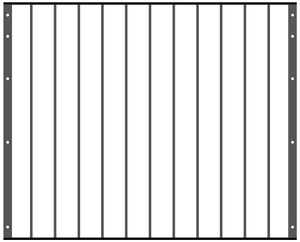
Plain simple Juliet balcony
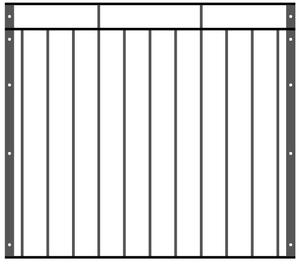
A Juliet balcony with double top bar
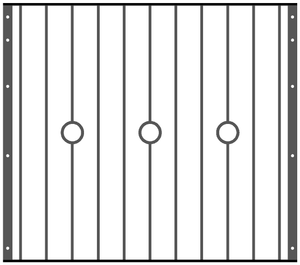
Juliet balcony with circle pattern
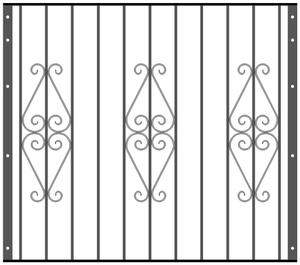
Juliet balcony with scroll pattern
Prices start at £200 for a 1200mm wide simple balcony. more designs and price details will be added soon.
We have many more Juliet balcony designs, far to many to list here and give a detailed price on.
