Wrought Iron Wall railings
Discover our made-to-measure wrought iron wall railings, available in over 100 unique styles in our design library. Whether you want to fully customize every detail—from bar thickness to spacing—or prefer a streamlined, budget-friendly solution, every piece is expertly crafted to ensure a precise, professional fit for your property.
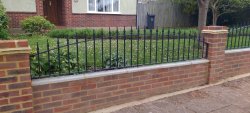
Internal page navigation
Our standard range can be made up to 3000mm long, and up to 900mm high. These are highly customizable, allowing for different thickness of material to be used and the option of round or square bar. Bar spacings are up to 100mm maximum gap between bars, this can be changed on request.
Budget or economy options for garden wall railings.
Our budget iron wall railings feature simple designs to keep costs low, utilizing a consistent 100mm gap between bars (see bar spacings for more details). Made to measure in lengths up to 2500mm and heights up to 600mm, they cover the vast majority of wall-top requirements. However, longer sections can easily be joined together using a connecting post.
All budget railings are constructed with 30mm x 8mm flat for the horizontal bars, with upright bars from 12mm round. Because This gives a good visual appearance, without looking light weight and cheap.
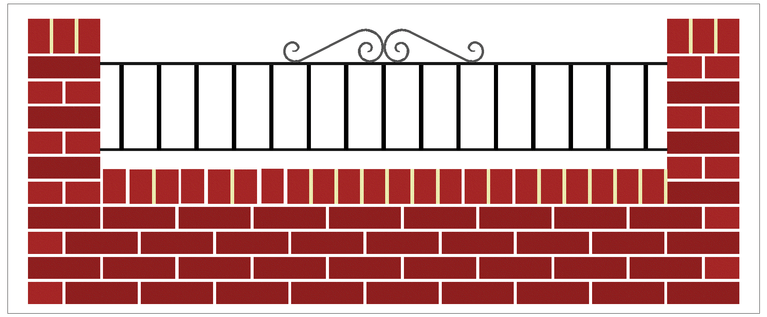
Prices start from £80 for a 3ft panel, £130 for a 6ft panel
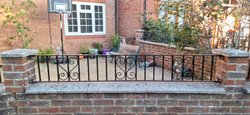
This is a very simple and cost effective wrought iron wall railing. Plain vertical upright bars and a pair of scrolls on the top.
An ideal low wall railing, when on a tight budget.
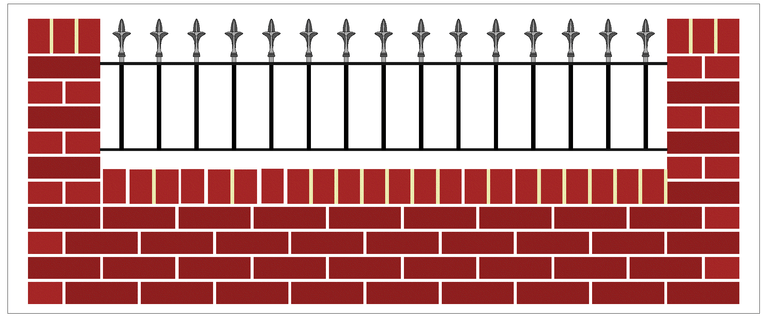
Prices start from £91 for a 3ft panel, £155 for a 6ft panel
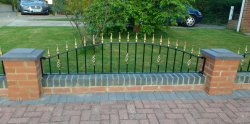
A more traditional wrought iron wall railing with decorative railing heads on top. This design is perhaps the classic wall top railing. With a choice of decorative railing heads.
Whilst not as cheap as the first design, due to the additional cost of adding railing heads, this is still a very budget friendly design. For a made to measure low wall railing.
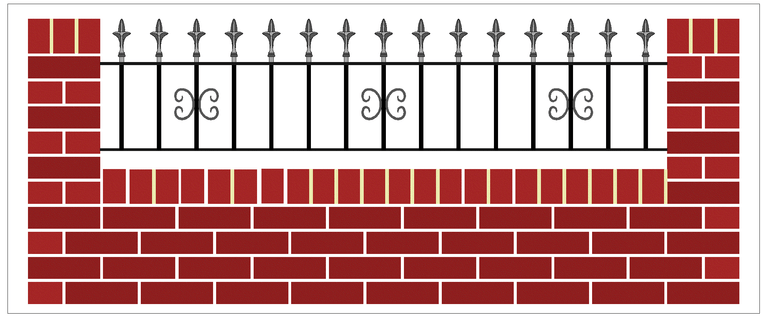
Prices start from £105 for a 3ft panel, £180 for a 6ft panel
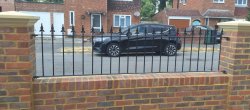
metal wall railing with a C scrolls pattern every 5th upright bar as decoration. This adds decoration to the wall top rail without adding a large price tag.
Still keeping it simple, but adding a dash of charm to a wall top railing.
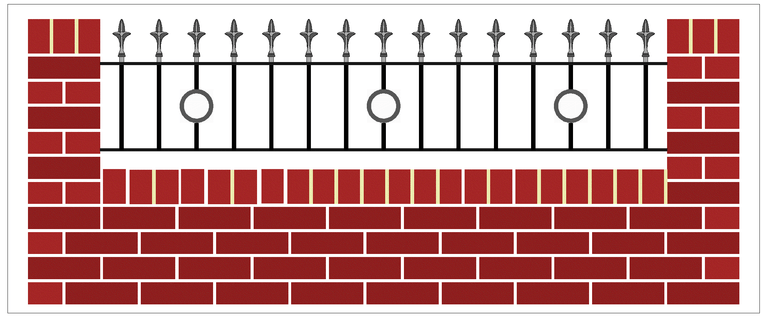
Prices start from £100 for a 3ft panel, £160 for a 6ft panel
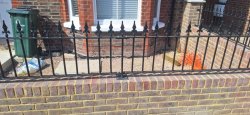
wrought iron wall railing with Rings as decoration.
Standard iron wall railings around 450mm tall.
These are short wall railings for the top of a wall, designs are based on a railing height of around 450mm, but these would suit taller railings.
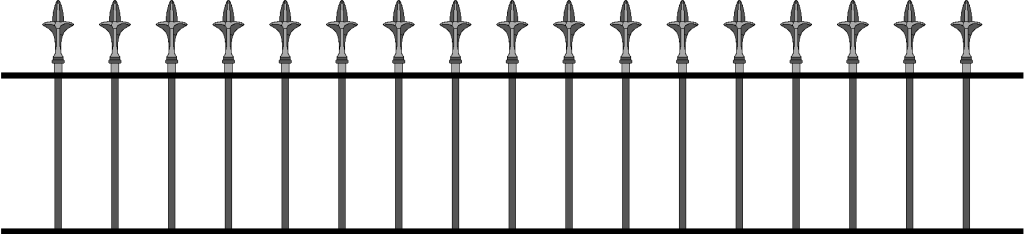
Classic wrought iron railing design.
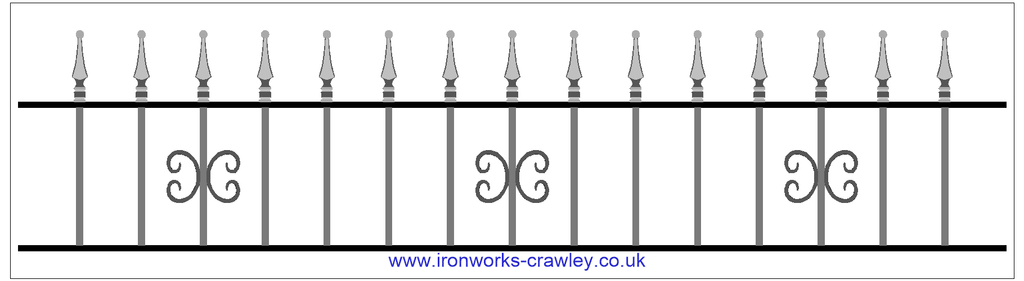
wall rail with C scrolls
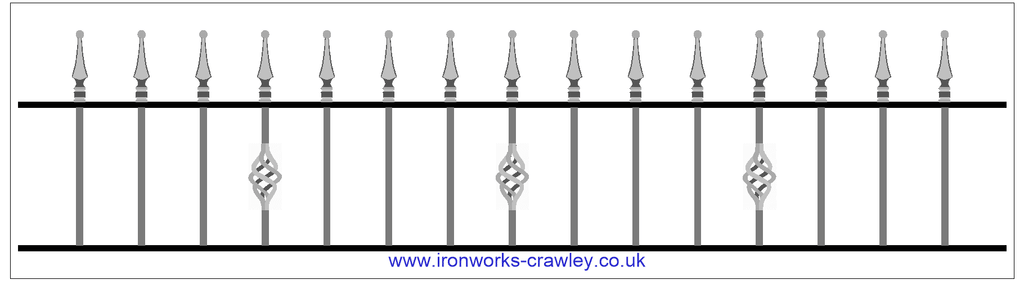
metal railing with baskets
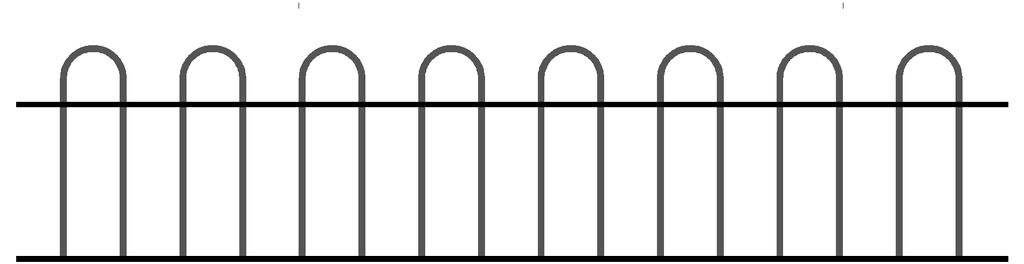
classic hoop style railing
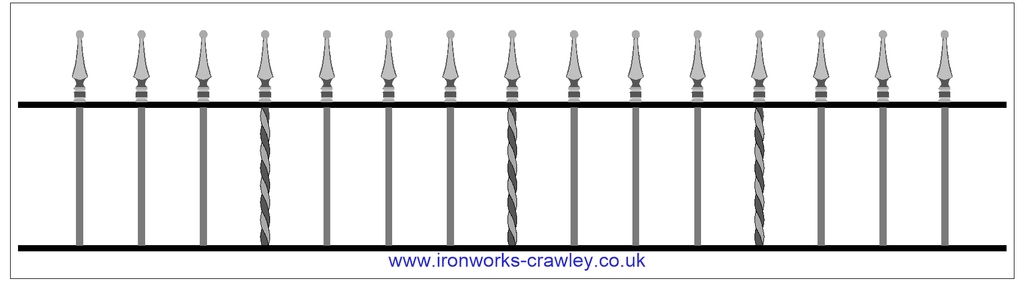
wall railing with twists
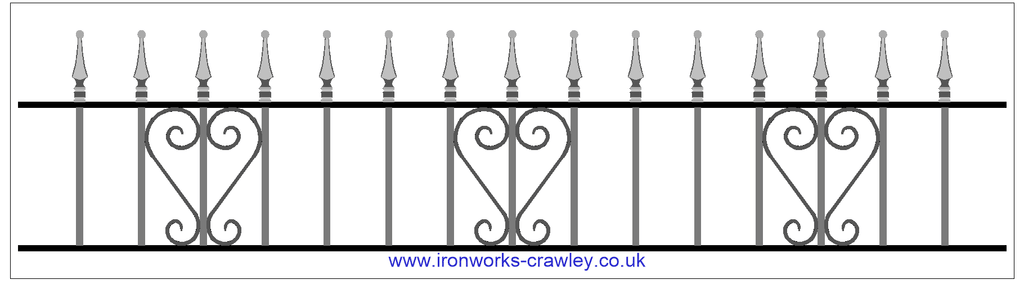
metal wall railing with S scrolls
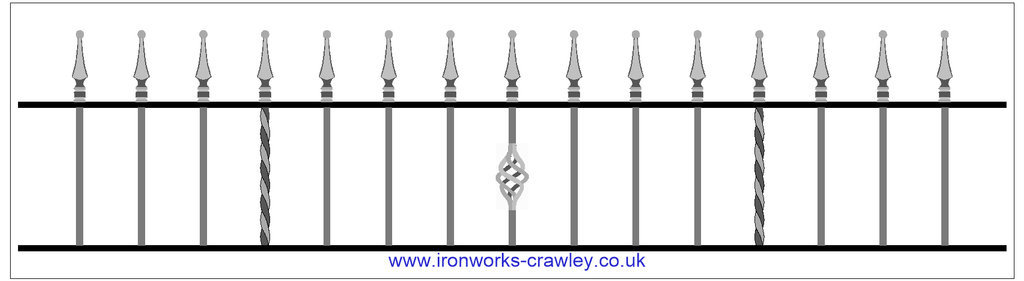
Railing with basket and cage
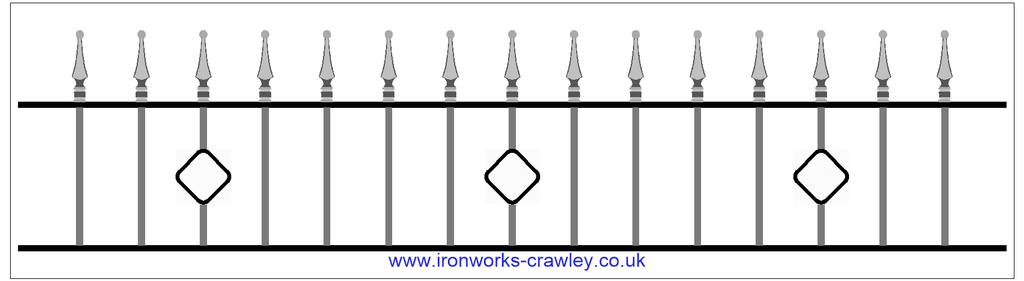
classic wrought iron railing
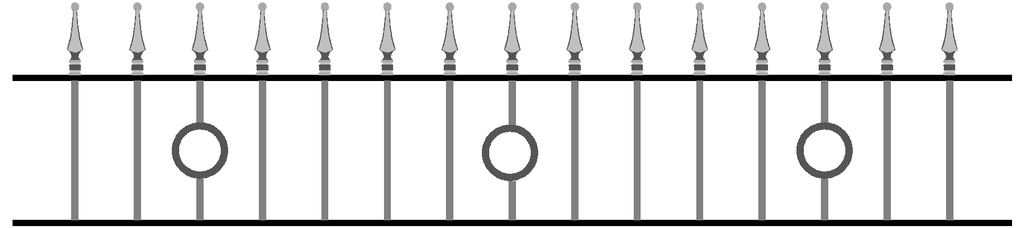
railing
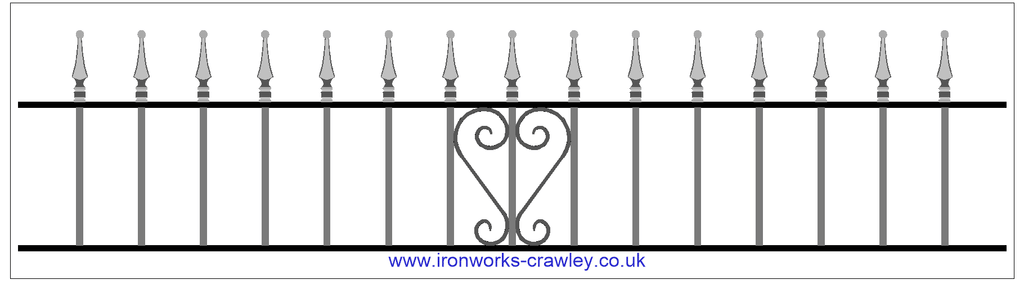
r
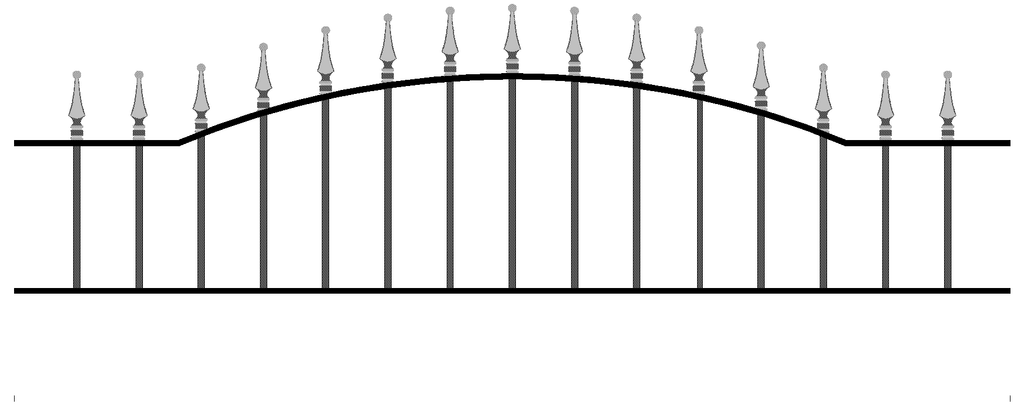
Arched wall top railing
For railings over 650mm
For railings over 650 mm it is possible to get more detail in the design due to the height. The following railings are most suited for those taller wall railings. although the shorter designs still work with taller railings.
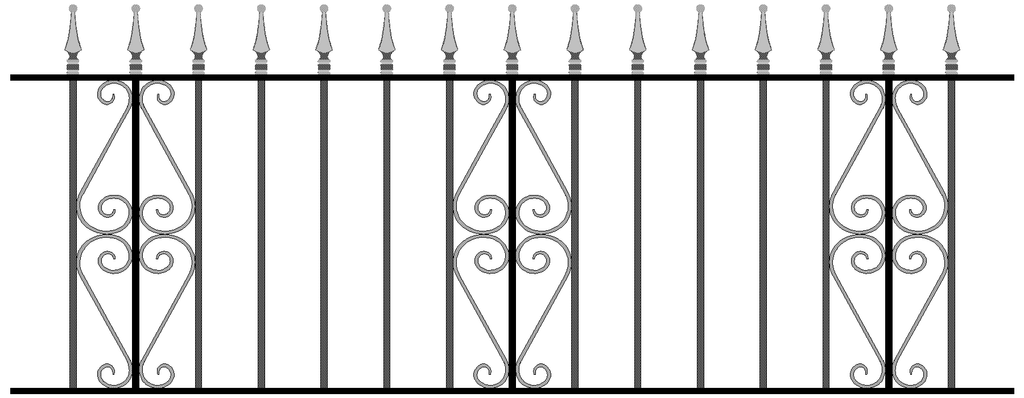
classic wrought iron railing
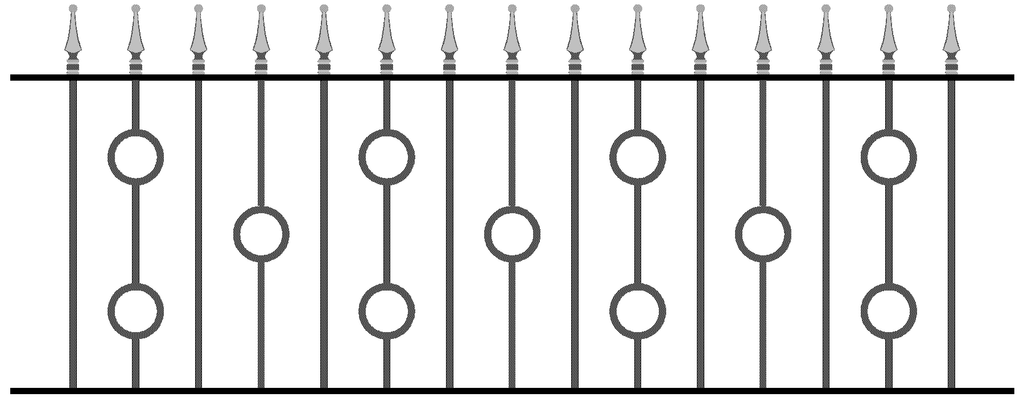
railing
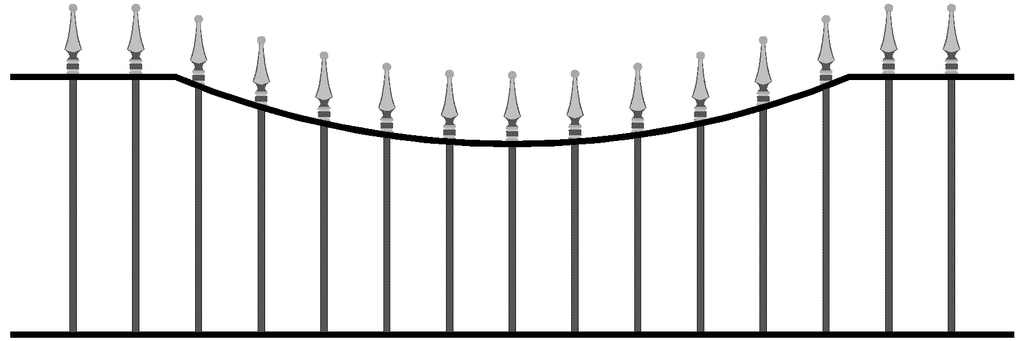
r
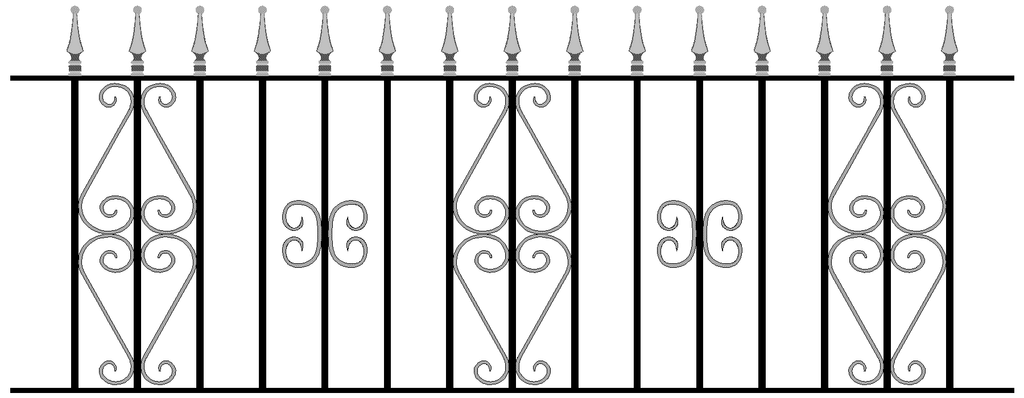
r
This is a tiny example of what is achievable in wall railing designs, for more ideas check out our designs page.
There are plenty of common situations where a standard railing just wont work, but it doesnt exclude you from having wall railings.
No brick piers?
If you have no brick piers to bolt your wall railing to, but only a flat wall, you can always use steel posts in place of brick piers. This is not an uncommon practice; walls are often built without the intention of having railings, and later, people decide it would be a good idea to add Iron railings. The photo is a good example of that sort of situation.
Even if the wall has a coping stone on top of the brick wall, posts can be made to fit.
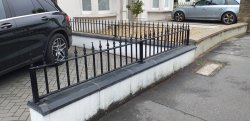
In fact it is cheaper to get a flat wall built rather than a brick wall containing brick piers. Steel posts for wall railings are usually in expensive costing around £30 depending upon style of post.
Shaped wall railings.
If you have shaped walls, wrought iron railings can be made to replicate the shape of the wall. This usually means taking a ply wood template of the shape. Then using it to replicate the shape in the workshop building the iron railing to follow the contour of the wall. This takes time and a little patients but the end result is that you have a wall railing, that follows the contour of the wall. Usually this requires a site visit to make the template.
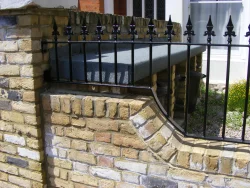
Stepped walls.
Stepped walls are not usually an issue, as in the picture just a case of using steel posts to pick up the step. There are two method of doing this, one is to keep the railing the level at the top. Meaning each iron railing panel gets longer as it steps down. Alternatively keep the railing panels the same height so that the wall railing steps down with the wall.
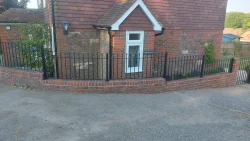
Curved wall.
Curved wall are not an issue, steel can be bent relatively easy to form a curved railing. Usually a Stirling board or ply template is need. This means making a copy of the wall curve, this allows the the top and bottom horizontals to be bent to the shape of the curve in the workshop. Then the upright bars are welded in position and you have a curved railing. More time consuming than a flat railing but it certainly does exclude you from having iron wall railings.
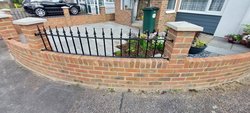
There is very little that excludes you from have a wall railing, most issue can be solved, excepted if you don’t have a wall. Then you need a fence instead.
Do you need planning permission for a wall and railings?
The answer to this question is usually no. As long as it is under 1 metre tall, when next to a path or road or 2 metres tall else where.
But there are occasions when an area has some form of conservation in place, which may not allow a wall and railings. This is quite rare but it does occur. New developments sometime have an exclusion that doesn’t allow you to change the front of the property for a period after the house has been built.
See planning portal for more details.
How much wall and how much railing?
What percentage should be wall and what should be railings. This down to personal preference but the shortest height for a railing is ideally around 450mm tall. This would leave 550mm for brick work. So on a wall 1 metre tall, half wall and half metal railing, Is perhaps a good ratio.
What i would advise on a short wall next to a path is that if you were wanting railing heads, to use the blunt type. These are the ones with balls on top. The others are not technically sharp but keeping safety in mind it does make sense to use railing heads with a larger radius on the top.
The video shows some of our designs from, the design library. This contains over 100 designs for iron railings for walls. of course the decorative railing heads on top can be changed for different types, this gives even more options.
A selection of different types of decorative railing heads are available for use contained in a video. Some are better suited to round upright bars, while others are more suited to square ones, though the final choice ultimately depends on personal preference.
Some of the railing heads have larger versions of themselves; these are for 16mm and 20mm upright bars and get progressively taller. All were photographed with a tape measure in the frame to give an idea of size.
This is not the full range but a selection.
